
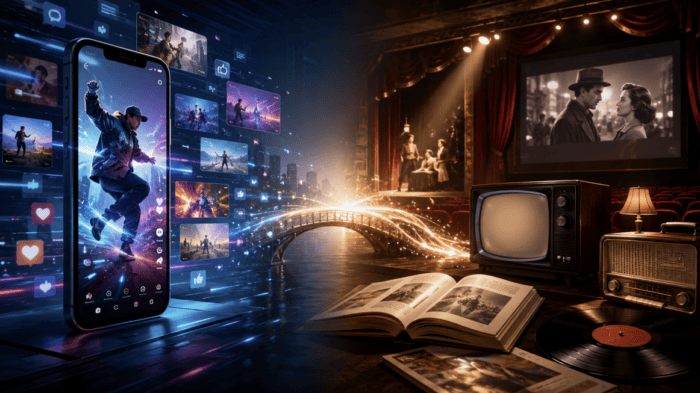
Those in the entertainment industry have had to deal with constantly changing demands since its inception. Conventional formats have found themselves caught in the shifting tides of a reshaping world, with automation, social media shorts, and bespoke forms of entertainment content becoming commonplace.
If brands can find the right balance, they lay the foundation to expand rapidly. We’ve seen struggling comedians become multi-millionaires by transitioning into podcasting; YouTubers can make a fortune from their art, but many who think they can leverage their audience into conventional forms like stand-up often find it is not as easy as they think.
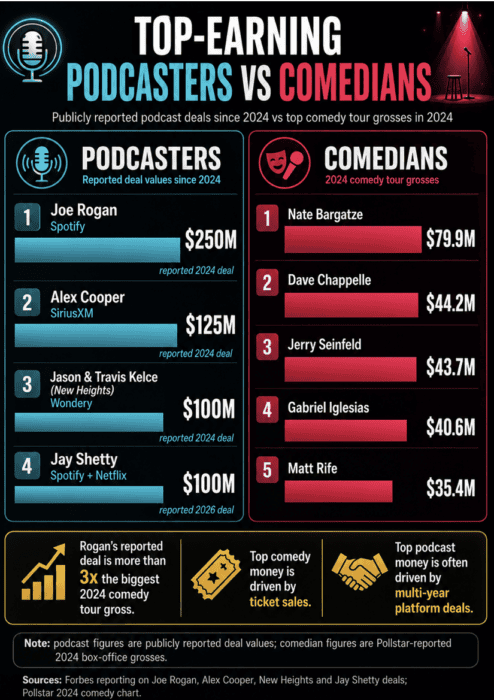
There’s also the argument that digital, bespoke forms of entertainment are the new norm; as you can see in the infographic below, the top podcasters earn more than the world’s highest-grossing comedians.
We have watched conventional TV shows and channels struggle in the age of 24/7 digital streaming market. They’re competing against global competitors that specialize in everything, essentially, so could we see these formats fade away in the face of advancing tech?
The Value Of Finding A Niche
Regardless of how niche your entertainment interest is, you can find an endless supply of content. If you are a fan of standup comedy, you can scroll Reddit for hours at a time and watch clipped segments from comedians from all over the globe.
Some even launch their full specials on the open-platform market of YouTube, relying on ad revenue generated by these views, with people finding their material that way and subsequently purchasing tickets. It’s a brave new world.
The best forms of entertainment often have palpable electric energy and a sense of jeopardy. It’s why millions of people were gripped by Evel Knievel before the internet existed; it’s why magicians like David Blaine garnered world news. This is an ingrained appeal that acts as a magnetic force, drawing in people who want to consume niche, gripping content.
Brands now specialize in this, but for those who put plenty of time, money, and effort into developing their brands, they can appeal to a bespoke market – but the skill is in finding the balance and developing a platform that people want to continuously return to as they look to find niche content that speaks to them.
Team Ignition season 2 looks to strike this balance. Thrill-seeking and entertainment are pillars of their show, as we saw in their original season. However, they have onboarded athletes, backdrops, and unique ideas, doubling down on the success and creating a brand that dazzles as much as it captivates.
The Invaluable Modern Currency Of Digital Attention
In a market that is limitless in depth, it can take only a few seconds for someone to switch from one form of entertainment to another. I do it myself. I’ll sit down to watch a 25-minute YouTube video, and within a few minutes, I’m distracted by a related video and end up in a rabbit hole.
Prominent conventional forms of art are still in high demand, though. The unique selling point hasn’t changed; it’s about offering a product that is genuinely innovative and creative, and that draws people in. It’s just harder when you are competing against a non-stop international market, but the tick box toward success remains the same.
The 2026 Toronto Fringe had a rich tapestry of comedy, spoken word, and theatre. While many of these performers were able to cultivate an audience via their social media channels, there’s a sense of unity and toil about watching a live performer who has clearly put an unimaginable number of hours honing their craft.
Pushing Back Against Solely Digital Creation
There’s obviously a market for those who want to make social media their full-time vocation, but for creators, there’s certainly a divide that exists. As someone with a network of entertainers, I see those who sit at home and make clips in the comfort and safety of their own bubble, capturing an audience.
However, with nearly half of all content creators earning less than $15,000 annually, it’s not the walk in the park that some perceive.
They don’t get the same pushback as live performers; they can remove content and control the narrative via their comments. Importantly, though, they also understand that their strength lies in these small clips, rather than in crafting an actual body of material they can refine on stage, as it is not their forte.
It’s also about margins; there are stand-up comedians, for instance, who are hopeless at using their social media channels, and they can’t build a following, no matter how hard they try or how much their social media team tries to get them to go viral. Often, a combination of a decent online presence and creative output across several media will yield the best results.
Final Thoughts
There’s an audience that doesn’t care much about social media at all; the whole art is in the live experience. That is why, despite challenging times for creators given the rise of AI and online media, there’s always going to be a market for them to flourish.
However, we also need to be wary of how engagement drives everything, and there are people out there who are desperate for it, as this is what fuels online revenue, with the rise of rage-baiting a perfect example of this. It is a vicious, uncreative cycle that relies solely on the aggression it generates.
As attention spans thin and people want instant, perfectly tuned content, it is harder for conventional forms that require much more tact and creativity to flourish. As many artists have shown, though, leveraging a digital following can allow them to generate enough attention and earnings to stay creative.
The bottom line is that the popularity of entertainment is driven by the size of your audience, regardless of how you capture them. In a world so reliant on digital media, conventional forms will have to continue adapting to ensure they survive in the long run.