
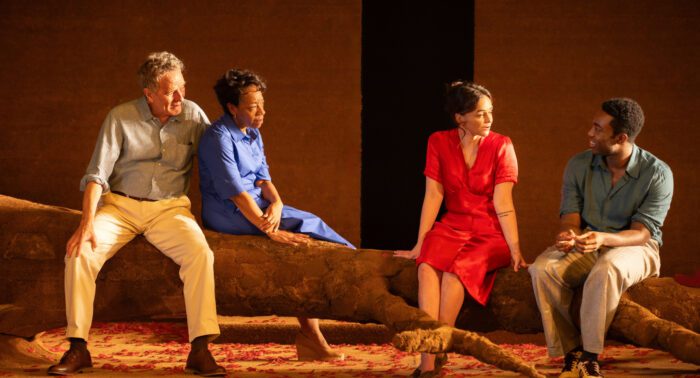
There are few modern innovations as inspiring as National Theatre Live. Broadcasting high profile stage productions into movie theatres is an astounding arts accessibility measure that knocks hoity toity work right off its pedestal and brings it to actual audiences regardless of their location or disposable income (see also: PBS Great Performances; irreplaceable). It’s downright revolutionary. Everyone should see everything programmed in the Cineplex Events series because theatre is for everyone and National Theatre Live is one of the rare institutions that both proves and facilitates that.
Now, that doesn’t guarantee that every National Theatre Live show is fantastic. You should see them all anyway (because genuinely why not; it costs $5 more than a regular movie, $5 LESS than an IMAX) but not all pieces deemed worthy of a pro-shot are totally deserving. They tend to feature celebrities or be only the most high profile shows, which any real theatre-goer will tell you isn’t the most reliable recipe for success. But the hit rate does tend to be better in London than, say, New York when it comes to the deployment of high profile people. The National Theatre is fairly reliable if not perfect.
But you know who is pretty much completely reliable? Arthur Miller. I have never in my life been let down by an Arthur Miller play. Even a mediocre production of one is still a damn good play. And this is not a mediocre production. Ivo van Hove is the leading director of Miller work in his generation, having helmed previous hits The Crucible and A View From the Bridge. While his modern, barebones approach isn’t necessarily my aesthetic of choice, I really appreciate not only his re-popularizing these midcentury classics but the fact that he seems to really love the plays, getting out of their way and letting the text talk.
The production of All My Sons that’s hitting Cineplex Events this week is a perfect example of setting the company loose on a great text and just letting Miller Miller. A sparse stage with a looming moon/window and a massive downed tree is all there is to the straightforward design, paired with simple ageless costumes and atmospheric but unobtrusive lighting. The cast is a generally strong mixed bag with standout performances from supporting players Hayley Squires (a sturdy and considerate Annie) and Tom Glynn-Carney, whose tweaky take on my favourite character George is packed with palpable anger masking bitter heartbreak. The accent work from the mostly British cast is hit or miss (the play is set in the midwest and leading man Bryan Cranston’s got an advantage there) and the effort comes out as a whine in the case of Paapa Essiedu’s essential Chris. But Marianne Jean-Baptiste is splendid as mother Kate, the picture of defiant denial keeping the truth away with a whip, a chair, and a homemaker grin, and Cranston acquits himself well with thoughtfully calloused charm though he overplays the final scene a bit. That may have been a directorial choice, though, because that too-much feeling is matched by the play’s ending note.
While imperfect, because all theatre is, this production of an all-time-great text is a privilege to see in any form and, for those of us not lucky enough to have been able to see it in London, its presence at Cineplex is a real gift.