
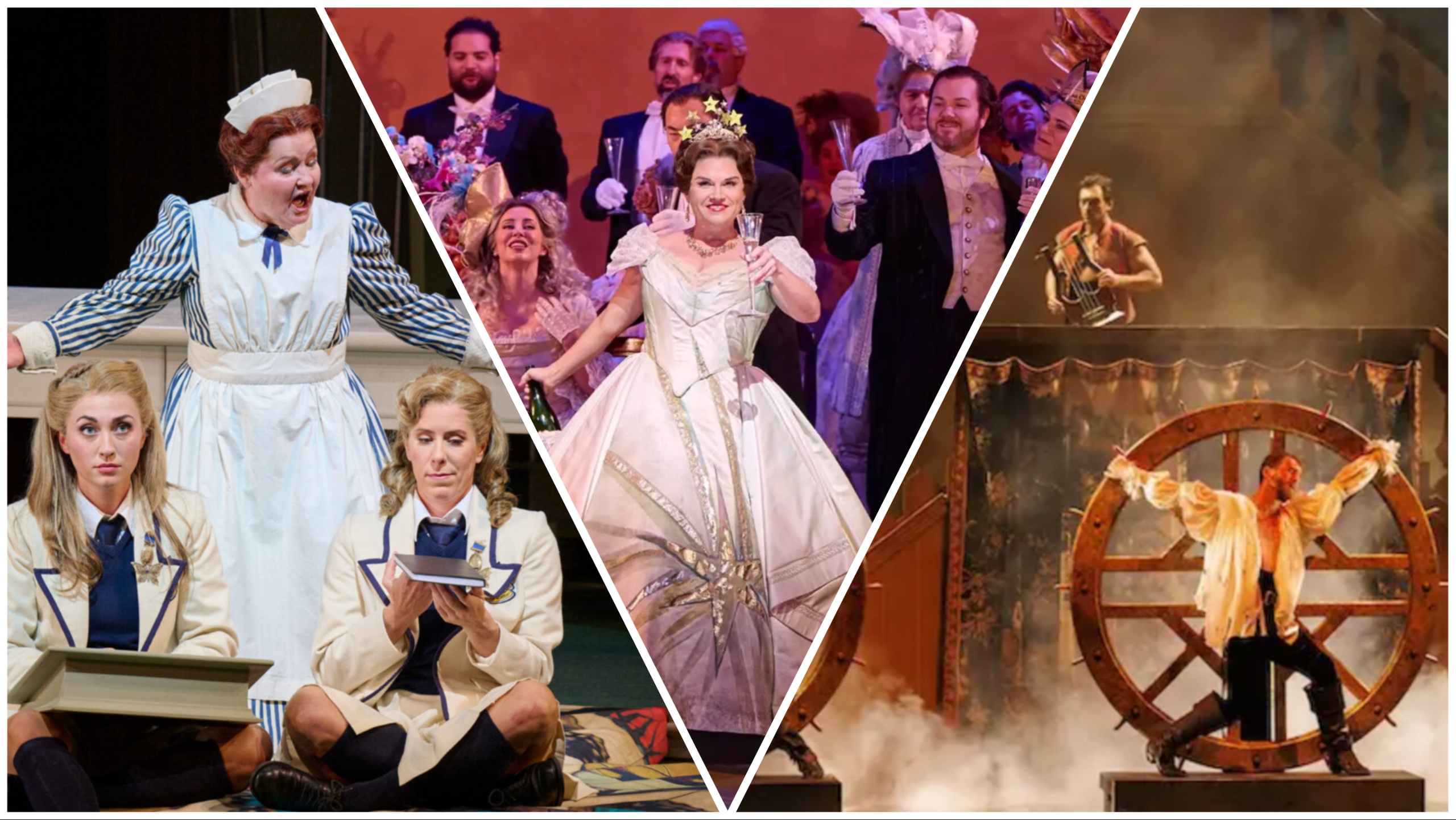
Toronto is rife with rich opera selections this fall as the Canadian Opera Company shares a delectable duo of well-contrasted classics foiled beautifully by Opera Atelier’s lavish take on a lesser known operatic adaptation of a familiar tale.
While the COC tends to lean on iconic works as their season tentpoles, the ever-ambitious Atelier embraces their role as an alternative to the country’s biggest company by programming less famous works, often with famous underlying stories. This time, it’s Orpheus & Eurydice, one of the most consistently theatricalized myths of all time (musicals, operas, films, plays- it’s been everything). Marc-Antoine Charpentier’s The Descent of Orpheus is swift and dramatic, clocking in well under two hours including an intermission and introductory aria. The Atelier production incorporates their signature ballet corps seamlessly (welcome back to town, Felix Paquet!) and the strong cast brings Charpentier’s score to life wonderfully, highlighted by Mireille Lebel’s Jenny Lind-coded diva Persephone and Daniel McGrew’s gorgeously sung Orpheus (though an underpowered Pluto with Pirate King energy disappoints). Designer Gerard Gauci’s multi-level set cleverly builds out Koerner Hall’s existing stage to transform the concert venue into a theatrical playing area. Surtitles are projected to translate the French text but the accompanying thematic images read as a bit corny. Packing big theatrical punch into a tight runtime in a space with arguably the country’s best acoustics, Opera Atelier has opened their season with a bang that absolutely refuses to be overshadowed.
Over in the bigger house, the COC has programmed two productions we’ve seen before though they remain some of the most memorable in the company’s robust repertoire. First up is Mozart’s Cosi Fan Tutte, a wildly offensive comedy brightened by director Atom Egoyan and designer Debra Hanson’s exuberant aesthetic. Incredible lightness is brought to the opera’s first act, so much so that the dreadful love test plot almost comes off as husbandly teasing rather than overt sexism. The plot simply goes too far to keep that act up forever, though, and act two demands heroic acts of forgiveness towards the ridiculous characters if the opera is to be enjoyed for its ebullience and musical pleasantries. A bit too serious of a performer for the story’s antics, soprano Lauren Fagan gets her chance to shine playing some of act two’s intensity with straightfaced earnestness while her wilder counterpart Martina Myskohlid brings great comic timing to the flirtatious Dorabella, perfectly matching Laurence Kilsby’s boyish Ferrando, sung with clear tone and great control. Daniel Okulitch masterfully pulls off the crucial magic trick of playing meddling psychopath Don Alfonso as a lovable scamp and, though some of the visuals hit the metaphors far too hard, the overall lightheartedness of this interpretation allows the audience to buy into a sense of harmless fun despite the walking red flag that is the plot.
On the other end of the spectrum is one of opera’s most complex and enduring stories in Verdi’s La Traviata (you can always count on Verdi to set his music to a story sturdy enough to carry it). A sensational leading performance from soprano Kathryn Lewek highlights this beautiful production in one of the canon’s most demanding roles. Lewek’s virtuosic control and vocal versatility is showcased through a uniquely strong acting performance in which she is bold enough to prioritize emotional honesty rather than protect technical perfection with a stand-and-sing approach. Dynamics and breath control support the storytelling and communicate the feelings and physical state of Lewek’s Violetta, marrying the medium’s theatricality with its technical demands to incredible effect. Lewek is joined by a swoony Long Long as the frustratingly shortsighted Alfredo and a beautiful performance from COC favourite Russell Braun as a conflicted and humane Giorgio who orchestrates the story’s tension without the need for a cartoonishly villainous bass. A fairly conventional interpretation with beautiful period sets and costumes, this production’s impact and relevance comes in the strength of its story and the honesty of its performances. Silly details in the chorus choreography and thematic touches like the spectre of abandoned party chairs are clearly meant to enliven the proceedings and bring unconventional visual interest but they’re hardly needed when the heart of the matter beats so strongly.